
Quick answer
Yes. A tooth infection can cause headaches because the trigeminal nerve links the teeth, jaw and face, so pain can spread to the temples, forehead or behind the eyes. Upper back-tooth infections can also add sinus pressure. If a headache comes with tooth pain, swelling or a bad taste, see a dentist; treating the tooth usually relieves the headache.
What our patients say
“I have been going to Rosenberg Smiles for years!!! They have a gorgeous office that is so clean and very modern.”Marty S.
“Very kind staff… very informative and helpful. I was in and out within an hour!”Mandy
In this article
- At a glance
- Can Tooth Infection Cause Headache? Understanding the Connection
- What Is a Tooth Infection?
- How Does a Tooth Infection Cause Headache?
- Signs the Headache May Be Dental-Related
- Can Tooth Infection Cause Migraine-Like Symptoms?
- When Headache and Tooth Pain Require Immediate Care
- How Dentists Diagnose the Source
- How Treatment Resolves Headache Caused by Tooth Infection
- Other Dental Issues That Can Cause Headaches
- Why Early Treatment Matters
- Preventing Dental Infections and Related Headaches
- Frequently Asked Questions (FAQ)
- Final Thoughts: Can Tooth Infection Cause Headache?
- When should you call a dentist?
- Dental care near you in Rosenberg & Fort Bend County
- Key takeaways
- Questions Rosenberg patients ask
- Sources & further reading
At a glance
| Why it happens | Shared nerve pathways, sinus pressure, jaw muscle tension |
|---|---|
| Clues it is dental | One-sided pain, sore tooth, pain when biting, bad taste |
| Diagnosis | Exam and digital X-rays |
| Treatment | Root canal, extraction or drainage, sometimes antibiotics |
It starts as a dull ache behind the eyes. Maybe pressure along the temples. Sometimes it feels like a sinus headache. Other times it mimics a migraine. Pain medication helps briefly, but it keeps coming back.
Then a surprising thought crosses the mind: could this actually be coming from a tooth?
Many people are unsure whether to call a primary care doctor for headaches or a dentist for tooth discomfort. When head pain and dental pain overlap, the connection can feel confusing. So the important question becomes: can tooth infection cause headache?
The answer is yes. In certain cases, a tooth infection can absolutely trigger headaches. Understanding how and why this happens helps determine the right next step.
Can Tooth Infection Cause Headache? Understanding the Connection
To understand how a tooth infection can cause headache, it helps to know how closely connected the nerves of the face and head really are.
Teeth are supplied by branches of the trigeminal nerve, one of the largest nerves in the head. This same nerve also carries sensation from:
-
The forehead
-
The temples
-
The cheeks
-
The jaw
-
Around the eyes
Because of this shared nerve pathway, pain that begins in a tooth can radiate and feel like it is coming from the head.
So when someone asks, can tooth infection cause headache, the answer is rooted in anatomy. Dental infections can irritate surrounding nerves, and the brain may interpret that pain as a headache.
What Is a Tooth Infection?
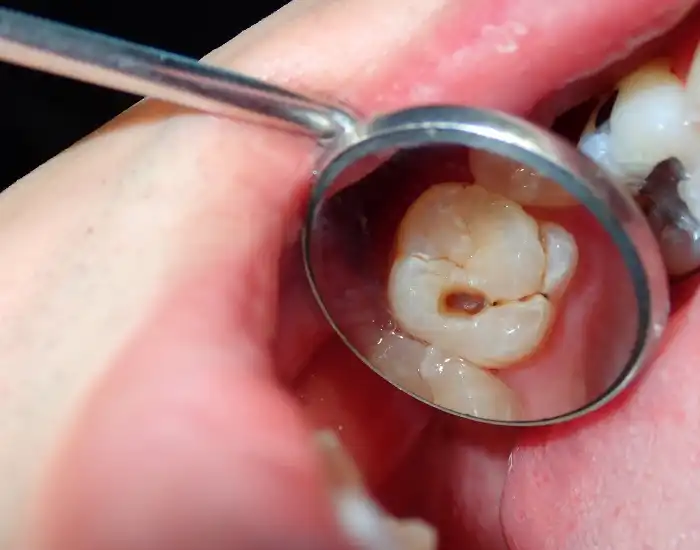
A tooth infection typically begins with untreated tooth decay or trauma.
Here is how it progresses:
-
Bacteria break down enamel and reach dentin
-
Infection spreads into the pulp, where nerves and blood vessels are located
-
Pus builds up at the root, forming an abscess
-
Pressure increases inside the tooth
That pressure can irritate nearby nerves and tissues, leading not only to tooth pain but also referred pain in the head.
How Does a Tooth Infection Cause Headache?
There are several ways a dental infection can trigger head pain.
1. Nerve Irritation
As infection spreads into the pulp, it inflames the nerve inside the tooth. Because that nerve connects to the trigeminal nerve, the pain can radiate upward into:
-
The temple
-
The forehead
-
Behind the eye
-
The side of the head
This referred pain explains why some people feel headache before realizing they have a dental problem.
2. Sinus Pressure
Upper back teeth sit close to the maxillary sinuses. When an upper molar becomes infected, inflammation can affect the sinus cavity.
This may cause:
-
Facial pressure
-
Congestion-like symptoms
-
Headache across the cheeks or forehead
In these cases, the person may assume it is a sinus infection rather than a dental infection.
3. Muscle Tension
Dental pain often causes unconscious clenching or grinding. This tension in the jaw muscles can lead to:
-
Tension headaches
-
Pain at the temples
-
Neck stiffness
Again, the original source may be the infected tooth.
Signs the Headache May Be Dental-Related
Not all headaches are caused by tooth infections. However, certain clues suggest a dental origin.
Watch for:
-
Tooth sensitivity to hot or cold
-
Pain when chewing
-
Swelling in the gums
-
Bad taste in the mouth
-
Facial swelling
-
Headache localized to one side
If a headache consistently occurs alongside tooth pain, it is reasonable to consider a dental evaluation.
When people wonder, can tooth infection cause headache, the pattern of symptoms often provides the answer.
Can Tooth Infection Cause Migraine-Like Symptoms?
Yes, in some cases.
Severe dental infections can trigger symptoms that resemble migraines, including:
-
Throbbing pain
-
Light sensitivity
-
Pain behind one eye
-
Nausea
The trigeminal nerve also plays a role in migraine disorders. Irritation from infection can sometimes activate similar pathways.
However, not every migraine is dental. If headaches occur without any dental symptoms, other causes should be considered.
When Headache and Tooth Pain Require Immediate Care
A dental infection can sometimes become serious if left untreated.
Seek urgent evaluation if headache occurs along with:
-
Facial or jaw swelling
-
Fever
-
Difficulty swallowing
-
Difficulty breathing
-
Severe worsening pain
-
Swelling that spreads to the eye or neck
These symptoms suggest infection may be spreading beyond the tooth.
In such cases, the question is no longer just can tooth infection cause headache, but whether urgent treatment is necessary to prevent complications.
How Dentists Diagnose the Source
A dental evaluation typically includes:
-
Clinical examination
-
Percussion testing of teeth
-
X-rays to detect abscess
-
Checking gum health
-
Assessing sinus involvement
Dentists differentiate between:
-
Reversible pulp inflammation
-
Irreversible pulp damage
-
Abscess formation
-
Non-dental headache causes
Clear diagnosis guides proper treatment.
How Treatment Resolves Headache Caused by Tooth Infection
If a dental infection is confirmed, treatment focuses on removing the infection source.
Common treatments include:
Root Canal Therapy
Removes infected pulp and seals the tooth.
Tooth Extraction
Removes the tooth if it cannot be saved.
Antibiotics
Used if infection has spread or caused swelling.
Once the infection resolves, associated headache often improves as well.
Many patients are surprised when chronic head pain disappears after dental treatment.
Other Dental Issues That Can Cause Headaches
It is not only infections that contribute to headaches.
Other dental causes include:
-
Teeth grinding
-
Jaw misalignment
-
Temporomandibular joint disorders
-
Impacted wisdom teeth
-
Severe gum infection
These conditions can strain facial muscles and nerves, leading to chronic head pain.
Why Early Treatment Matters
Untreated dental infections rarely improve on their own. Instead, they tend to worsen.
Delaying care can lead to:
-
Increased pain
-
Spread of infection
-
More complex procedures
-
Higher cost
-
Greater health risk
Addressing infection early prevents both dental complications and persistent headaches.
Preventing Dental Infections and Related Headaches
Preventive habits significantly reduce risk:
-
Brush twice daily with fluoride toothpaste
-
Floss daily
-
Limit sugary foods and drinks
-
Attend routine dental checkups
-
Address small cavities promptly
-
Wear a nightguard if grinding
Preventive care not only protects teeth but also reduces the chance of nerve-related head pain.
Frequently Asked Questions (FAQ)
1. Can a tooth infection cause daily headaches?
Yes. If the infection irritates facial nerves or creates sinus pressure, it can cause recurring or daily headaches until the dental problem is treated.
2. Can a tooth infection cause headache without tooth pain?
In some cases, yes. Referred pain can appear in the head before severe tooth pain develops. However, most infections eventually produce noticeable dental symptoms.
3. How do I know if my headache is from a tooth or sinus infection?
Dental-related headaches often worsen when chewing or pressing on a specific tooth. Sinus headaches typically include nasal congestion and facial pressure. A dental exam and X-ray can help confirm the source.
4. Will antibiotics stop the headache if it’s caused by a tooth infection?
Antibiotics may temporarily reduce infection-related inflammation, but they do not eliminate the source inside the tooth. Definitive treatment such as a root canal or extraction is usually necessary.
5. Can an upper molar infection cause pain behind the eye?
Yes. Upper molars sit near the maxillary sinus and share nerve pathways with the eye area, which can cause pain behind the eye.
6. How long does headache last after dental treatment?
If the headache was caused by infection, improvement often begins within a few days after proper treatment. Complete resolution depends on the severity of inflammation and individual healing response.
Final Thoughts: Can Tooth Infection Cause Headache?
So, can tooth infection cause headache?
Yes. Because of shared nerve pathways, inflammation from a dental infection can radiate into the head and mimic tension headaches, sinus pressure, or even migraine-like pain.
The key is recognizing patterns. When headache appears alongside tooth sensitivity, swelling, or chewing discomfort, a dental evaluation is a wise next step.
Treating the source often resolves the pain more effectively than repeatedly treating the symptom.
Persistent head pain should never be ignored, especially when dental symptoms are present. Identifying the root cause protects both oral health and overall well-being.
Medical Disclaimer: This article is for educational purposes only and does not replace professional medical or dental advice, diagnosis, or treatment. If experiencing severe headache, facial swelling, fever, or difficulty breathing or swallowing, seek immediate medical attention. For personalized evaluation of dental pain or infection, consult a licensed dental professional.
When should you call a dentist?
- Swelling in your face or neck makes it hard to breathe or swallow
- You have a high fever with facial swelling
- You had a serious blow to the head or jaw
- Pain is severe or keeps you awake
- A tooth is knocked out or broken
- You notice pus, a bad taste or swollen gums
- Pain lasts more than one or two days
Dental care near you in Rosenberg & Fort Bend County
Rosenberg Smiles Dental is at 2307 4th Street, Rosenberg, TX 77471, with free parking outside. We are open Monday to Friday, 9am to 5pm, and walk-ins are welcome. Many of our patients come from these nearby communities and ZIP codes:
- Rosenberg 77471
- Richmond 77469
- Richmond / Pecan Grove 77406
- Richmond 77407
- Sugar Land 77478 · 77479
- Needville 77461
- Beasley 77417
- Boling 77420
- Wharton 77488
- Fulshear 77441
- Simonton 77476
- East Bernard 77435
Key takeaways
- Dental pain can travel along the trigeminal nerve to the head.
- Upper molar infections can mimic sinus headaches.
- Headache plus tooth pain or swelling points to a dental cause.
- Root canal treatment or extraction removes the source.
- Facial swelling with fever needs same-day care.
Questions Rosenberg patients ask
Where can I get a tooth infection treated in Rosenberg, TX?
Rosenberg Smiles Dental at 2307 4th Street treats dental infections Monday to Friday, 9am to 5pm, with walk-ins welcome.
Will antibiotics alone fix a tooth infection?
Antibiotics can calm an infection, but the tooth still needs treatment such as a root canal or extraction to remove the source.
Is a tooth infection with headache an emergency?
If you have facial swelling, fever or trouble swallowing or breathing, seek care the same day; call 911 if breathing is affected.
Do you see patients from Sugar Land and Richmond?
Yes. We treat patients from Sugar Land, Richmond, Pecan Grove, Needville and across Fort Bend County.
Your next step
Talk to a Rosenberg dentist today
Don't let a dental problem get worse. Dr. Tanvi Dusane and our team will explain your options clearly and give you an estimate before any treatment.
Sources & further reading
- MouthHealthy by the American Dental Association – Patient information from the ADA
- CDC – About Oral Health – Centers for Disease Control and Prevention
- NIDCR – Oral Health for Adults – National Institute of Dental and Craniofacial Research
- MedlinePlus – Dental Health – U.S. National Library of Medicine
Medical disclaimer: this article is for general information and does not replace an exam by a dentist. Reading it does not create a dentist-patient relationship. If you have an emergency, call 911.

About the dentist
Dr. Tanvi Dusane, DDS, holds a Texas state dental license, a Master’s in Public Health from Texas A&M University and post-doctoral training in Dental Public Health with the New York State Department of Health. She has completed more than 200 hours of continuing education.
Written by the Rosenberg Smiles Dental team.